Category: Editorials

  • Bronze Age Horror Comics: When the Monsters Came Back

    Bronze Age Horror Comics: When the Monsters Came Back

    The Pink Room Journal · Collector Editorial

    Bronze Age Horror When the Monsters Came Back

    The Code loosened its grip. Coffins opened. Swamps stirred. And American comics discovered that monsters could be tragic, glamorous—and heroic.

    A collector’s guide to the beautiful darkness
    1971

    The lock clicks open.

    Bronze Age horror did not merely revive old monsters. It taught an entire generation of comics how to live in the shadows.

    For years, the Comics Code had pushed vampires, werewolves, ghouls and overt horror to the edges of mainstream newsstands. Then the 1971 revision permitted classic monsters when handled in a recognized literary tradition. The language remained cautious, but the creative door had opened—and publishers rushed through it with capes, claws, curses and impeccable cover art.

    The result was not a return to the pre-Code shock comic. It was something stranger and, in many ways, more enduring: the monster as protagonist. Dracula could carry a long-running Marvel title. A doomed teenager could become Werewolf by Night. A flaming skeleton could roar across a cover like the patron saint of supernatural rebellion.

    The Rule That Changed the Rack

    Classic monsters were invited back in.

    The 1971 Code revision specifically allowed vampires, ghouls and werewolves when treated in the tradition of works such as Frankenstein, Dracula and respected supernatural literature. Publishers understood the opportunity immediately.

    That single change helped transform horror from a forbidden category into a new engine for character creation. The decade’s best supernatural books mixed Gothic atmosphere with superhero continuity, social anxiety, tragic romance and pure grindhouse electricity.

    Vampires, ghouls and werewolves could return—provided they entered through the door of classic literature.

    Paraphrased from the 1971 Comics Code revision

    The Hands Behind the Shadows

    Horror has an artist’s fingerprint.

    The Bronze Age is not one style. It is Wrightson’s Gothic brushwork, Colan’s moving shadows, Ploog’s pulpy ferocity—and Tom Sutton’s gloriously unrestrained nightmares.

    Before the 1971 Code revision reopened mainstream comic racks to classic monsters, Warren’s magazine-format horror had already created a place for darker work. Tom Sutton became the first story artist of Vampirella and then carried his frantic, atmospheric line into Warren, Marvel and the wonderfully strange Charlton horror books of the 1970s.

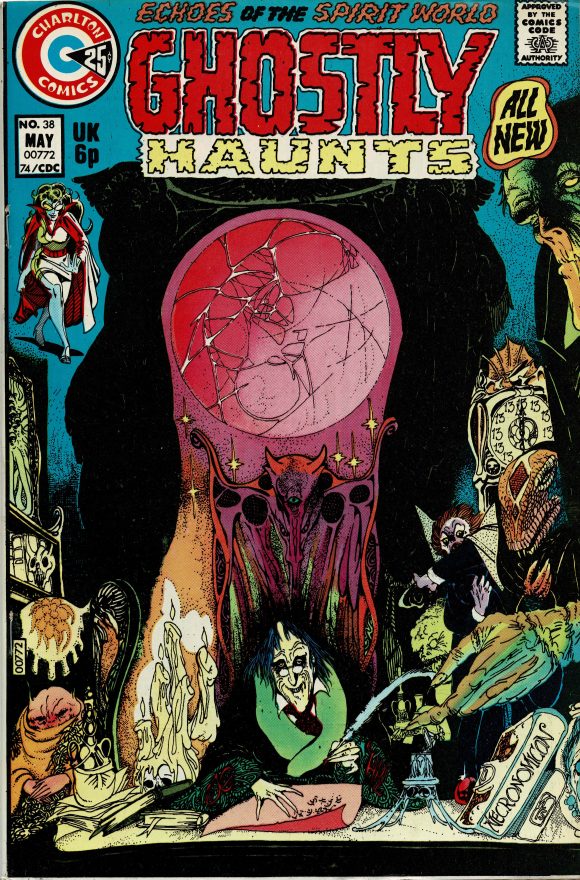
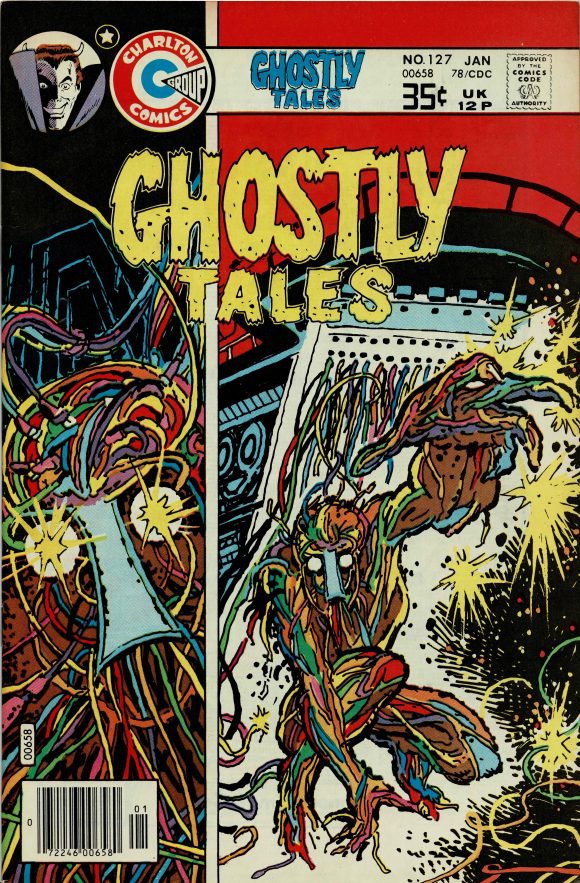
    Tom Sutton’s painted nightmares

    These Charlton covers show why Sutton deserves a place in any Bronze Age horror conversation: crowded compositions, theatrical terror and color that feels one heartbeat away from chaos.
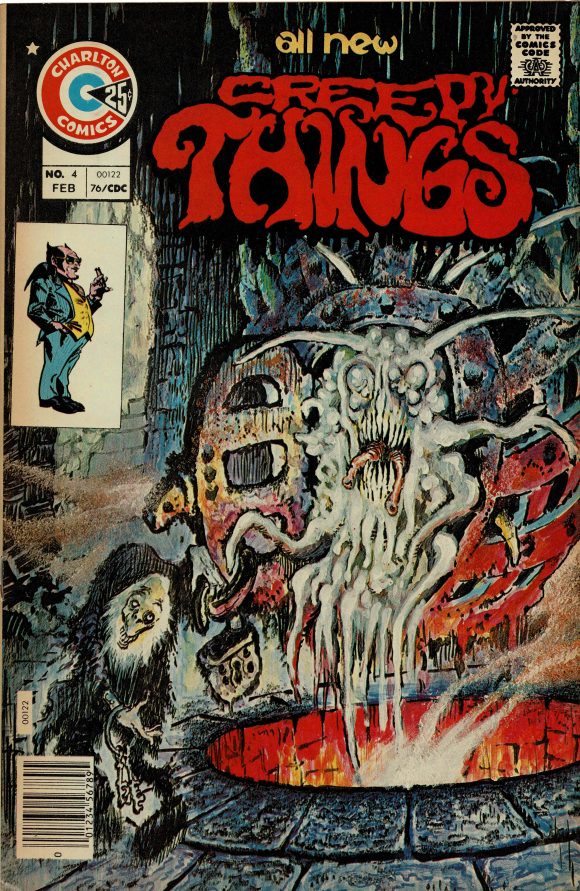
    Tom Sutton cover art for Creepy Things volume 1 number 4
    Creepy Things #4
    Tom Sutton cover art · Charlton
    Tom Sutton cover art for Ghostly Haunts number 38
    Ghostly Haunts #38
    Tom Sutton cover art · Charlton
    Tom Sutton cover art for Ghostly Tales number 127
    Ghostly Tales #127
    Tom Sutton cover art · Charlton

    Three architects of the darkness

    Comic artist Bernie Wrightson at the 2006 Dallas Comic Con

    Bernie Wrightson

    Co-creator of Swamp Thing and the master whose intricate pen and brush work made decay feel almost romantic.

    Photo: Corey Bond · CC BY-SA 3.0 · Wikimedia Commons

    Comic artist Gene Colan at the 2009 Big Apple Summer Sizzler

    Gene Colan

    The visual soul of Tomb of Dracula, drawing fog, motion and menace as though every panel were lit by moonlight.

    Photo: © Luigi Novi · CC BY 3.0 · Wikimedia Commons

    Comic writer Marv Wolfman

    Marv Wolfman

    The writer who helped turn Tomb of Dracula into a landmark run and co-created Blade with Gene Colan.

    Photo: Noel Wolfman · Public domain · Wikimedia Commons

    Historic comic covers are reproduced at low resolution for criticism and commentary; all cover art and characters remain the property of their respective rights holders. Cover image source: 13th Dimension’s Tom Sutton Charlton gallery.

    Six Doors Into the Era

    The keys that define the comeback.

    Not every important horror book is scarce. Not every classic cover contains a first appearance. The magic is learning what kind of importance you are holding.

    DC · 1971

    House of Secrets #92

    Len Wein and Bernie Wrightson’s first Swamp Thing story is Gothic tragedy distilled into one unforgettable issue. DC identifies it as the character’s first appearance, and Wrightson’s cover remains one of the defining images of Bronze Age horror.

    Collector lens · first appearance + iconic cover

    Marvel · 1971

    Amazing Spider-Man #101

    Morbius arrived as a “living vampire”—scientific enough to enter Spider-Man’s world, monstrous enough to announce that the old restrictions were losing their power. It is the perfect bridge between superhero comics and the supernatural boom.

    Collector lens · major debut in a flagship title

    Marvel · 1972

    Tomb of Dracula #1

    Dracula did not sneak back as a guest villain. He claimed his own title. The series would run from 1972 through 1979 and become one of Marvel’s signature horror achievements, with Gene Colan’s shadow-soaked storytelling central to its identity.

    Collector lens · launch of a landmark horror run

    Marvel Spotlight · 1972

    Marvel Spotlight #2

    The first appearance of Jack Russell’s Werewolf by Night turned lycanthropy into an ongoing family curse. Mike Ploog’s art brought a raw, pulpy energy that makes the early issues feel less like standard superheroes and more like midnight cinema.

    Collector lens · first appearance + monster magazine mood

    Marvel Spotlight · 1972

    Marvel Spotlight #5

    Johnny Blaze’s first appearance as Ghost Rider is pure Bronze Age spectacle: stunt motorcycles, a bargain with darkness and the immortal visual of a flaming skull in motion. Horror had officially become superhero mythology.

    Collector lens · enduring character + unforgettable design

    Marvel · 1973

    Tomb of Dracula #10

    Blade’s first appearance proved that the horror revival could create heroes as culturally durable as any costumed crime-fighter. He did not merely survive the vampire genre—he helped carry it into comics, film and the modern Marvel universe.

    Collector lens · first Blade, born inside a horror title

    Buying With Your Eyes Open

    Condition is part of the story.

    Bronze Age horror covers often make defects impossible to hide—and that is precisely why beautiful copies feel so luxurious.

    • Inspect the dark fieldsBlack, navy and deep red covers advertise color-breaking spine ticks, rub and edge wear.
    • Check every attachment pointConfirm the cover, staples and centerfold are secure before deciding what the grade might be.
    • Look for missing insertsValue stamps, coupons and interior cutouts can matter far more than a glossy front-cover photograph suggests.
    • Separate rarity from demandA first appearance, classic cover, scarce issue and fan-favorite run are four different collecting arguments.
    • Respect the paperA conservative press may improve suitable non-color-breaking defects, but no treatment should gamble with a key book’s structure.

    Why the Era Still Matters

    Bronze Age horror made the monster beautiful enough to collect and complicated enough to love.

    These books sit at the crossroads of classic cinema, Gothic literature, superhero continuity and 1970s counterculture. They gave artists permission to work in shadow. They gave writers protagonists who could be cursed, morally uncertain or visibly monstrous. And they gave collectors a category where a single issue can be a first appearance, a cover masterpiece and a tiny piece of cultural rebellion all at once.

    That is why the best Bronze Age horror keys do not feel like relics. They still feel dangerous on the wall.

    Enter the Collection

    Buy the book that haunts you.

    Ronnie’s Cupboard of Curiosities is where comics, artifacts and dark little treasures wait for their next caretaker. And when an older key needs careful presentation work, the Pink Room Spa puts preservation first.

    Ronnie · The Pink Room Journal · VeronicaTot Comics
  • Veronica Lodge: The Original Comic Book It Girl

    Veronica Lodge: The Original Comic Book It Girl

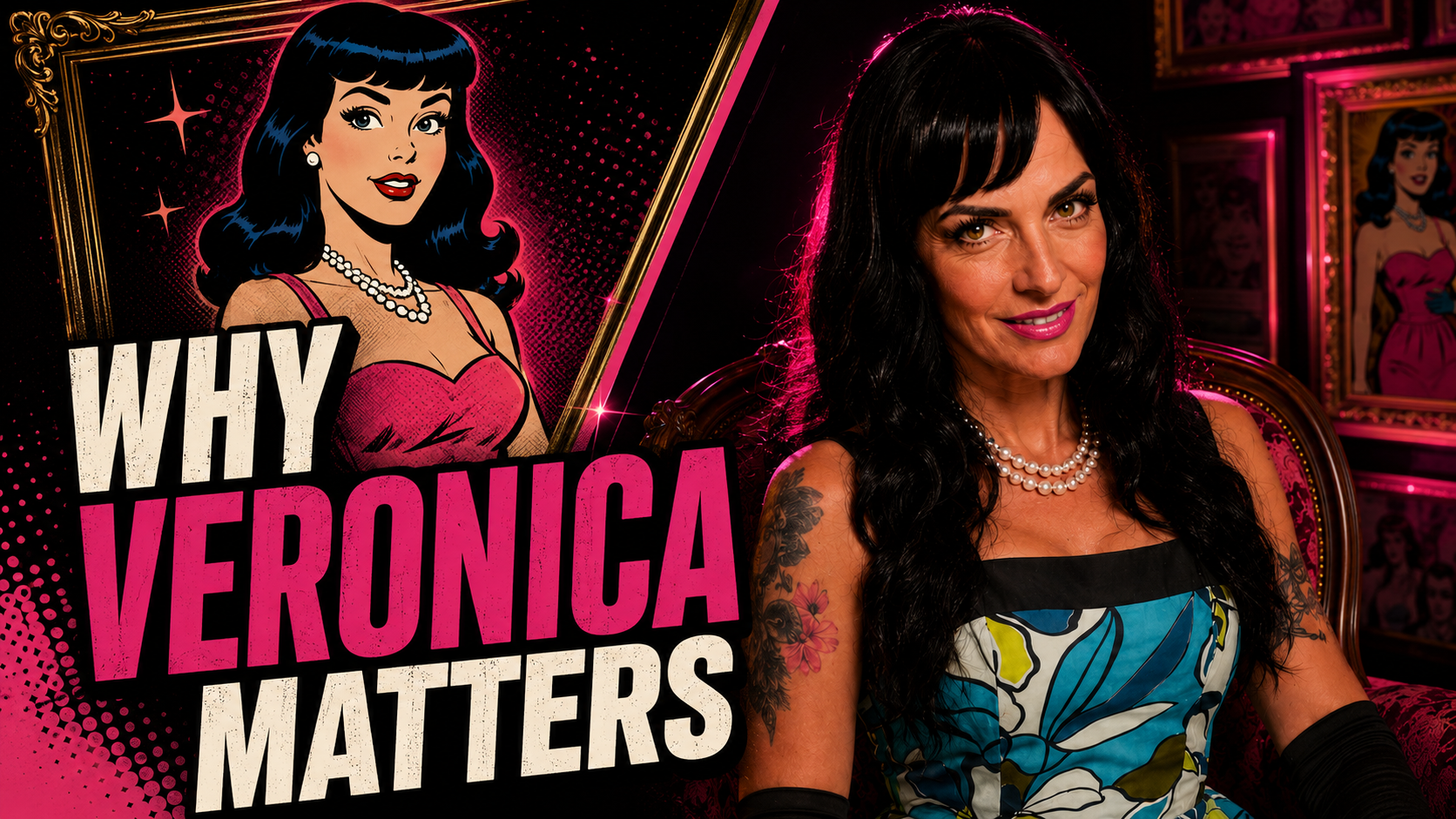
    Veronica Totten with Veronica Lodge artwork reading Why Veronica Matters

    Everything’s Riverdale · Character Spotlight

    The Original Comic Book It Girl

    Veronica Lodge did not enter Riverdale asking whether she was too much. She arrived certain that the town would make room for her.

    Debut: 1942Pep Comics #26Riverdale RoyaltyFashion Icon

    I did not call myself VeronicaTot Comics by accident. Veronica Lodge may not be my favorite Archie character—that crown has always belonged to Jughead—but favorite and influence are not the same thing.

    Jughead was the character I loved. Veronica was the character I studied. She entered every scene as though she already belonged there. She loved fashion, elegance and beautiful things, and she was never afraid to be seen.

    People often reduce Veronica to “the rich girl”: spoiled, vain and forever standing between Archie and Betty. That is only the surface. Beneath the diamonds, sports cars and impossible wardrobe is one of the most confident, adaptable and misunderstood women in comic-book history.

    Watch the complete Veronica Lodge featureWatch on YouTube

    Riverdale Makes Room for Veronica

    Veronica Lodge first appeared in Pep Comics #26 in 1942, and Riverdale was never quite the same again. Archie already had Betty Cooper: capable, familiar and right there next door. Veronica arrived from outside that comfortable world carrying wealth, sophistication and an entirely different kind of energy.

    Archie did not simply gain another romantic interest. Riverdale gained contrast. Betty represented the girl everyone already knew; Veronica represented the girl everyone noticed when she entered the room.

    Money alone is not charisma. Plenty of wealthy characters have come and gone. Veronica endured because she had presence. She wanted the best seat, the best dress and the last word. She could be charming one moment and infuriating the next, but she was never invisible.

    1942Debuts in Pep Comics #26
    1989Her solo series begins
    2011The 210-issue run concludes
    TodayStill commanding every universe

    Glamour Is Part of the Story

    Watch Veronica evolve through the covers and the fashions change while her posture barely does. Hemlines rise and fall. Evening gowns give way to mod looks, disco glamour, preppy polish and modern power dressing. Through every decade, the chin remains up and the expression composed. She knows people are looking, and she is perfectly comfortable with that.

    Fashion in comics is not merely decoration. Comics are a visual medium, and clothing tells us who a character believes she is before she says a word. Veronica’s wardrobe communicates taste, privilege, ambition, control and sometimes glorious excess.

    Her glamour was not a disguise. It was a declaration: I am here. I know who I am. You may look.

    There is nothing shallow about enjoying beauty. Presentation can be part of authorship—the way we tell the world who we are before anyone else gets to write the introduction.

    Confident, Spoiled and Complicated

    Let us be honest: Veronica can be spoiled. She can be jealous, competitive, demanding and spectacularly out of touch. She has used money to get her way, treated Archie like a prize and occasionally behaved as though all of Riverdale were an extension of Lodge Manor.

    I would not erase any of it. Those flaws are not a failure of the character; they are character. Too often a confident woman is only considered likable after a story softens her, humbles her or teaches her to take up less space. Veronica can learn a lesson without surrendering her identity. She can be generous without pretending she no longer enjoys luxury.

    Confidence in women is frequently rewritten as vanity by people who find modesty easier to admire than self-possession. Veronica forces us to sit with the difference. She can be vain and still be brave, loyal, resourceful, funny and genuinely kind. The best stories allow all of those things to be true.

    Betty and Veronica Are the Real Love Story

    The familiar shorthand is Betty versus Veronica: the wholesome blonde against the glamorous brunette, the girl next door against the socialite, two women competing for Archie Andrews. That triangle may be one of comics’ most durable engines, but it is not the whole relationship.

    Betty and Veronica are not virtue and vice. They are two kinds of female power. Betty is practical, warm and persistent. Veronica is polished, assertive, socially fearless and ambitious. Each possesses qualities the other admires, and each can drive the other completely crazy.

    They compete, travel, scheme, rescue and forgive one another. The covers may sell the rivalry, but the friendship gives it meaning. The older I get, the less interested I am in asking whom Archie should choose. The more interesting question is why Betty and Veronica continue to choose each other.

    She Became the Headliner

    Veronica began inside Archie’s world, but she did not remain a supporting character. She shared the spotlight in Betty and Veronica, starred in countless stories and digests, and received her own ongoing series in 1989. That title ran for 210 issues through 2011.

    A character who might have remained one point of a romantic triangle proved she could carry comedy, fashion, family stories, travel and an entire supporting cast under her own name. She became a destination.

    That same strength lets Veronica survive reinvention. Adam Hughes could make Betty & Veronica sleeker and more cinematic. Archie Horror could transform her into Vampironica, turning elegance gothic and confidence dangerous. The universe can change around her, but Veronica still commands the frame.

    Why Veronica Lodge Mattered to Me

    I did not want Veronica’s money. I wanted her confidence—the way she walked into a room as though she belonged there, her ease with glamour, her love of beautiful things and her refusal to apologize for being noticeable.

    She showed me that comics and couture were never opposites. Femininity did not make a comic fan less serious. You could know the history, care about the creators, love the paper, the art, the hunt and the strange little details collectors obsess over—and still arrive with style.

    VeronicaTot Comics, the Pink Room and the belief that comics deserve couture too did not come from one fictional character. But Veronica Lodge gave me a language for combining things people sometimes insist must remain separate: intelligence and beauty, collecting and presentation, sincerity and spectacle, comics and glamour.

    The name is not about pretending to be Veronica Lodge. It is about recognizing what she represented to me: permission.

    Permission to be visible. Permission to enjoy beautiful things without defending them. Permission to be confident before everyone else has agreed that you have earned it.

    Veronica did not become an icon because she was flawless. She became an icon because she was impossible to overlook. More than eight decades after she first entered Riverdale, she still reminds us to know who we are, dress for the entrance we deserve and never be afraid to make the room make room for us.

    From the Lodge Library

    Make Room for Veronica

    See the covers, the history and Ronnie’s personal connection in the complete VeronicaTot Comics video feature.

    Watch the Feature on YouTube