The Pink Room Journal · Halloween History
Before the Candy,
There Were Ghost Stories.
Turnip lanterns, disguised visitors, romantic predictions and the many traditions that became Halloween.
Hello, my darlings. Before we had miniature candy bars, plastic vampire teeth and skeletons tall enough to supervise the neighborhood, Halloween already had quite a history.
Look past the porch decorations and you find seasonal change, remembrance, disguise, mischief and a remarkably persistent interest in what might be waiting in the dark. Today’s celebration brings those threads together, with plenty of room for each generation to add something of its own.
A Holiday with More Than One Beginning
Halloween’s roots include the Gaelic festival of Samhain and later Christian observances associated with the dead. Samhain marked the transition into the darker part of the year. But the tidy statement that it was definitely “the Celtic New Year” deserves caution: the Library of Congress’s American Folklife Center explains that the evidence is debated. [1]
That distinction matters. Seasonal customs changed across places and centuries; today’s Halloween is not a perfectly preserved ancient ceremony. Its history is more interesting when we allow it to be complicated.
The name points to All Hallows’ Eve, the evening before All Saints’ Day on November 1. All Souls’ Day follows on November 2. These neighboring observances help explain why remembrance and supernatural storytelling share so much space around this time of year. [1]
A holiday can carry old stories without standing still. Every generation brings something new to the doorstep.
Before the Pumpkin, There Was a Turnip
The National Museum of Ireland documents Halloween lanterns carved from turnips. Its collection includes a painted plaster model based on a lantern received from County Donegal in 1943; the donor described the design as familiar locally around 1900. [3]
The museum connects the lantern’s name to the folktale of Jack, barred from both Heaven and Hell and left to wander with a light. That is folklore, not a documented biography—and the difference is part of the pleasure.
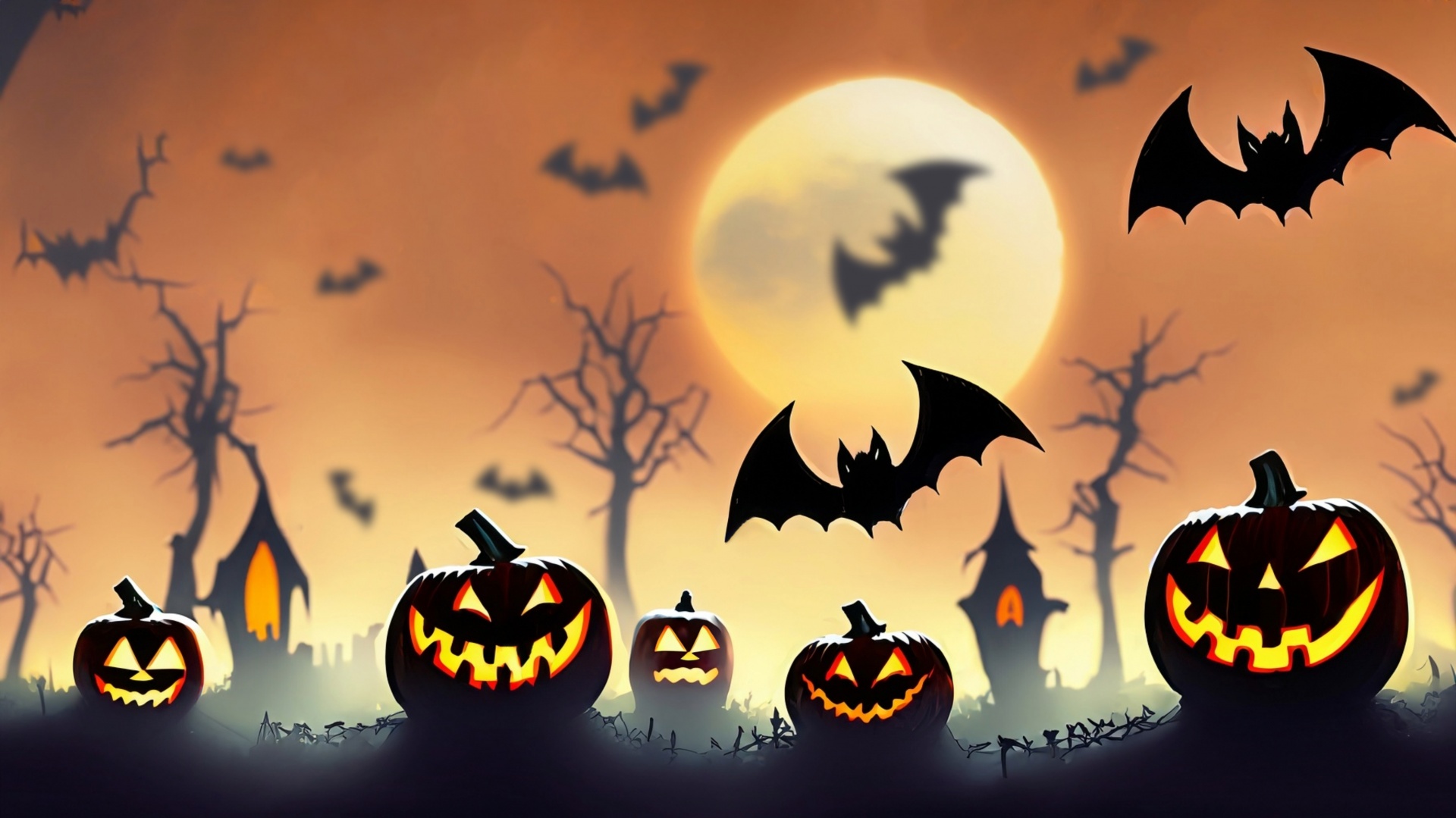
Pumpkin lanterns are an American development of the Irish practice, the museum explains. The familiar glowing grin has a history, but it did not begin with an orange pumpkin on a suburban porch. [3]
And if you have ever seen a carved turnip face, you understand its appeal. A pumpkin can look cheerful. A turnip tends to look as though it knows where the bodies are.
Costumes, Doorsteps and the Price of a Treat
Modern trick-or-treating has several historical relatives. In “souling,” visitors received food in return for prayers for the dead. In Scottish and Irish guising traditions, costumed callers might sing, recite or perform for offerings. These practices help illuminate the later custom without giving us one simple, unbroken origin story. [4]
Irish and Scottish migration helped carry Halloween customs into American life. Over time, local celebrations reshaped them. The door-to-door exchange became a familiar scene in popular culture: HISTORY notes trick-or-treating in Peanuts in 1951 and Disney’s Donald Duck cartoon Trick or Treat in 1952. [4]
For the comic collector in the Pink Room, that is an irresistible little connection: the doorstep ritual was becoming part of the same popular imagination that filled newspaper strips and animated screens.
When Halloween Tried to Predict Your Love Life
Older Halloween entertainment was not exclusively about monsters. The National Endowment for the Humanities highlights historical newspaper accounts of games involving apples, nuts and even cabbages, used in playful attempts to discover a future spouse or fortune. [2]
An 1888 account described pulling a cabbage and interpreting the earth clinging to its roots as a sign of a wealthy future husband. These newspaper reports preserve what people said and played; they do not establish that every custom was ancient or universally practiced. [2]
Personally, I admire the theatrical commitment. An entire romantic forecast, and apparently the vegetable drawer had to do the work.
Candy Was a Later Addition to the Costume
The Halloween bag did not always mean a collection of individually wrapped sweets. Earlier American trick-or-treaters could receive baked goods, fruit, nuts, coins or toys. Candy manufacturers promoted Halloween more heavily in the 1950s, and commercially produced sweets became an increasingly convenient choice. [5]
That change is a useful reminder that a tradition can feel timeless while still being shaped by shopping habits and advertising. The costume at the door may be part of an older pattern; the exact contents of the bag can be much newer.
Why We Still Make Room for the Dark
There is no single explanation for everyone’s Halloween. Some people cherish the costumes. Some want a neighborhood evening with their children. Others prefer a ghost story, a stack of horror comics or a black-and-white movie after midnight.
In the Pink Room, I like the space Halloween gives us to be theatrical together. We can appreciate an old superstition without believing it, admire a monster without inviting it home, and turn an ordinary evening into an occasion.
The history adds another kind of enjoyment. That lantern on the doorstep, that knock at the door and that story told with the lights turned low all have lives beyond our own celebration. Learning about them makes the night feel larger.
Sources & Further Reading
- Library of Congress, American Folklife Center — Samhain, uncertainty about the Celtic New Year, and the All Hallows calendar.
- National Endowment for the Humanities — Historical newspaper accounts of Halloween, divination and American celebrations.
- National Museum of Ireland: Ghost Turnip — A documented lantern tradition and the folklore of Jack.
- HISTORY: How Trick-or-Treating Became a Halloween Tradition — Souling, guising, immigration and popular culture.
- HISTORY: The Haunted History of Halloween Candy — The shift toward commercially produced sweets.
Leave a Reply