Category: Horror

  • Tom Sutton: The Artist Who Made Horror Breathe

    Tom Sutton: The Artist Who Made Horror Breathe

    Some artists draw monsters. Tom Sutton made you suspect the monsters had been there before he arrived—and might still be there after you closed the book.

    Hello, my darlings.

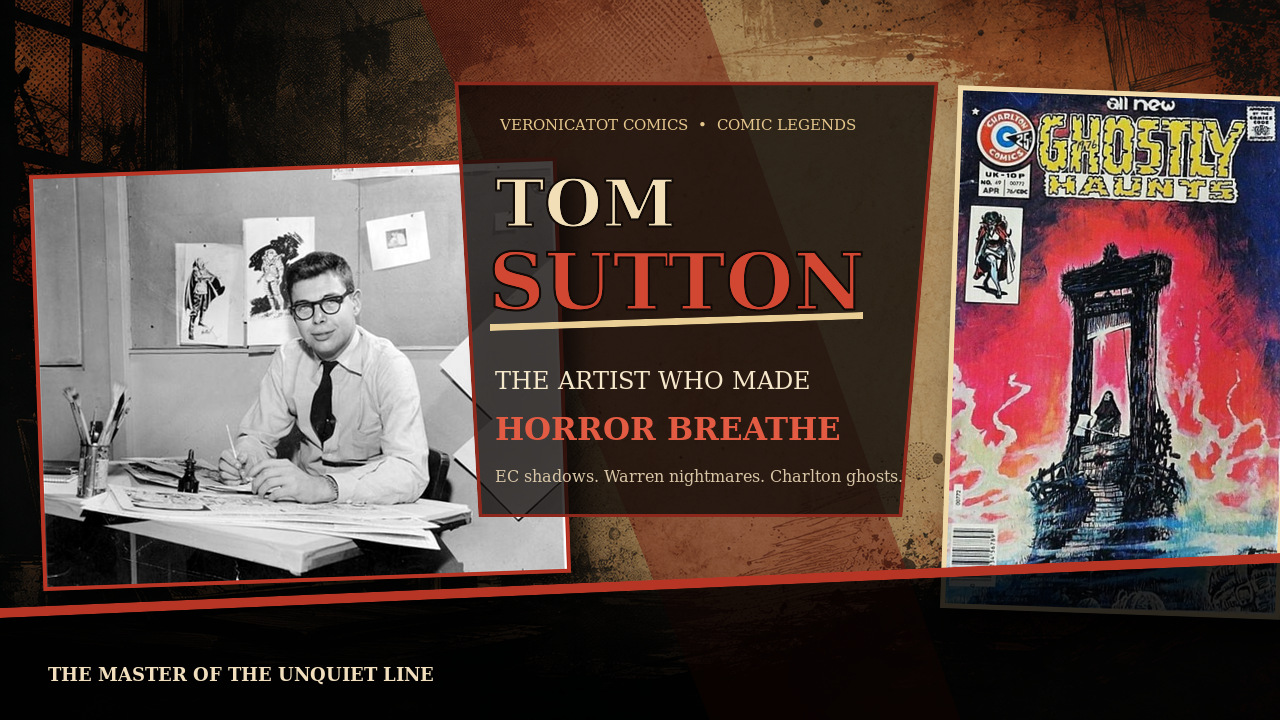
    There is a copy of Ghostly Haunts #49 that keeps pulling me back. It is not a superhero key. There is no celebrated first appearance waiting inside to turn every price guide upside down. What it has is a painted cover by Tom Sutton: a guillotine rising from a feverish red inferno, a lonely hooded figure beneath its blade, and just enough cold blue at the bottom to make the whole scene feel even more impossible.

    A guillotine is rarely what one calls tasteful décor, but Sutton makes a persuasive case.

    That April 1976 cover explains his appeal better than a tidy checklist ever could. Sutton’s pictures do not simply illustrate horror. They seem to absorb it. His shadows feel damp. His machinery looks overworked. His rooms appear to remember every terrible thing that happened inside them. Even when the story is quiet, the page is never entirely at rest.

    This is the story of an artist who moved through Westerns, horror, science fiction, licensed properties, underground work, and nearly every corner of the comics business without ever becoming easy to categorize. Tom Sutton was not polished in the conventional superhero sense. He was better suited to stranger territory.

    He could turn an empty corner into a place where even the wallpaper had motives.

    Before the Monsters: North Adams, EC Comics, and a Drawing Table

    Thomas F. Sutton was born in 1937 and grew up in North Adams, Massachusetts, a New England mill town whose brick factories and long winters sound, in retrospect, almost suspiciously well cast for the beginning of a horror artist’s life.

    Drawing became both fascination and refuge. Sutton devoured newspaper strips and comic books, but EC Comics supplied the great revelation. The science-fiction, horror, and war titles associated with artists such as Johnny Craig, Graham Ingels, Wally Wood, and Will Elder showed him how sophisticated commercial comics could be. In a lengthy interview with Gary Groth, Sutton remembered believing that another creative flowering like EC was bound to happen—and wanting to help make it happen.

    That expectation would follow him through his career. Publishers often wanted pages completed quickly and inexpensively. Sutton wanted atmosphere, invention, and the freedom to draw the peculiar machinery lurking in the back of his mind. The tension between those two desires is visible throughout his work.

    As a boy, Sutton received a sturdy drafting table from his father. Decades later, he was still using it. That detail feels beautifully appropriate: publishers changed, formats disappeared, and entire genres fell in and out of fashion, but Sutton kept returning to the table.
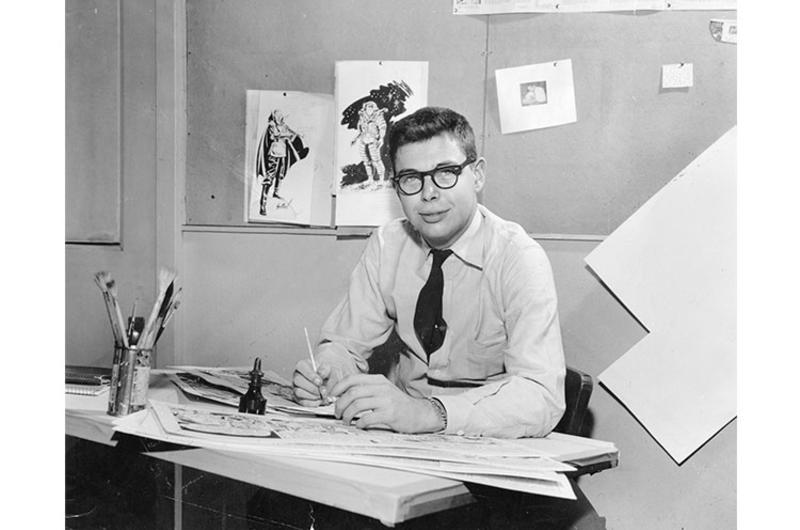
    Young comic artist Tom Sutton working at his drawing board in the Stars and Stripes office in Tokyo
    Tom Sutton at his drawing board while serving with the United States Air Force in Japan, 1958. Photograph: Stars and Stripes.

    His Real Art School Was in Tokyo

    Sutton joined the United States Air Force in 1955 and was stationed in Japan. He eventually landed at the Tokyo office of Stars and Stripes, where he created the daily science-fiction strip Johnny Craig. The title honored one of his favorite EC artists, while the story followed a rocket pilot searching for a second Earth in the distant year of 2058.

    It was a formidable apprenticeship. Sutton had to draw on deadline, solve visual problems quickly, and learn beside experienced magazine artists. He later described Stars and Stripes as his art school. It is difficult to imagine a better preparation for comic books: tell the story, make the deadline, and do not wait for inspiration to send a formal invitation.

    When Sutton eventually brought examples of that work to Marvel, Stan Lee was impressed that the young artist had already produced a daily strip for two years. Sutton was handed paper and Western assignments. His professional comics career is generally dated to 1967, when a backup story appeared in Rawhide Kid.

    Yet superheroes were never his natural habitat. Sutton was interested in environments, atmosphere, strange technology, and the visual possibilities of fear. A clean punch across a clean panel was useful. A crumbling laboratory filled with wires, fog, and something breathing behind the wall was much more his speed.

    Warren Publishing Opens the Door

    Warren Publishing gave Sutton the territory he had been seeking. In magazines such as Creepy, Eerie, and Vampirella, he could use ink wash, gray tones, deep blacks, and grotesque textures that the standard color comic did not always accommodate.

    His early relationship with editor and writer Archie Goodwin was especially important. Sutton remembered Goodwin as an editor who understood drawing as well as writing—someone who could suggest a change without flattening the artist’s personality. That sort of editorial intelligence mattered to Sutton because his best pages depended on rhythm. The shadows, expressions, architecture, and small background disturbances all had to arrive at precisely the right moment.

    Sutton also made an essential contribution to one of Warren’s most enduring characters. Vampirella had already appeared as a cover figure, but Sutton became the first artist to draw her in an interior story in Vampirella #1. That distinction is important. He did not create Vampirella, but he helped move her from iconic cover image into sequential life.

    And what a natural pairing she was with Sutton: glamorous, theatrical, strange, and surrounded by darkness that knew how to pose.

    Black-and-white Vampirella comic artwork drawn by Tom Sutton
    Tom Sutton’s wonderfully theatrical black-and-white artwork for Vampirella #11. Image reproduced for critical and historical commentary; source and Sutton tribute: StarWarp Concepts.

    Charlton Comics and the Freedom of the Shadows

    If Warren allowed Sutton to work in atmospheric black and white, Charlton Comics gave his eccentric imagination another kind of playground. The company was famously economical, operating far from the polished center of New York publishing. The rates were modest, the production could be rough, and yet artists sometimes found room there that more prestigious publishers would never have granted them.

    Sutton became one of the defining visual voices of Charlton horror. His work appeared in titles including Ghostly Haunts, Ghost Manor, Midnight Tales, and The Many Ghosts of Doctor Graves. He wrote and drew stories, rendered horror hosts, filled panels with occult laboratories and ancient rooms, and created painted covers that looked less like sales displays than recovered evidence.

    His Charlton work could be elegant and grotesque in the same panel. Faces stretched toward caricature, but the emotion remained convincing. Backgrounds accumulated scratchy marks and anxious detail. A figure might appear almost comical until Sutton placed it beside something genuinely dreadful. That unstable balance is a central part of his style: he knew that horror becomes more unsettling when it is allowed to grin.

    Which brings us back to Ghostly Haunts #49. The issue’s cover is attributed to Sutton as a painting. It does not promise a famous new hero or a universe-changing event. It promises a mood—and then delivers one with alarming confidence.

    The interior stories were produced by other creators, an important bibliographic detail, but the cover belongs unmistakably to Sutton’s world. The guillotine is too tall, the fire too vivid, the platform too precarious. Reality has been stretched just enough to become a nightmare.

    Sutton did not ask whether a scene was realistic. He asked whether it felt haunted.

    Ghostly Haunts issue 49 painted cover attributed to Tom Sutton, featuring a guillotine surrounded by red fire and blue water
    Ghostly Haunts #49, April 1976. Painted cover attributed to Tom Sutton. Image: Charlton Tales.

    Planet of the Apes and Worlds Built Line by Line

    Sutton’s interest in science fiction found one of its richest outlets in Marvel’s black-and-white Planet of the Apes magazine. Working with writer Doug Moench, he helped create the “Future History Chronicles,” a sequence that pushed beyond straightforward movie adaptation into elaborate new territory.

    Moench and Sutton shared an enthusiasm that the artist did not always encounter in commercial assignments. Sutton admired Moench’s writing, and their collaboration encouraged the kind of dense world-building he loved: civilizations, machinery, ruins, costumes, creatures, and entire histories suggested in a few crowded panels.

    Look closely at one of Sutton’s science-fiction pages and the background rarely behaves like a background. Pipes bend into darkness. Structures multiply. Machines appear to have been repaired by several generations of increasingly desperate mechanics. The setting becomes part of the cast.

    That is why his science fiction and horror feel related. Whether he drew a crypt or a spacecraft, Sutton wanted the environment to possess a past. His worlds looked used, damaged, and inhabited. Nothing had just been unboxed.

    Star Trek, Likenesses, and the Limits of a Licensed Universe

    From 1984 through 1988, Sutton worked extensively on DC’s Star Trek comics. On paper, it sounded ideal: a science-fiction property filled with starships, alien worlds, control panels, and unexplored corners. Sutton accepted the assignment enthusiastically because he loved science fiction, even if he was not approaching it primarily as a devoted Star Trek fan.

    The licensed reality proved more restrictive. Character likenesses required attention, reference materials could be inadequate, and some of the elaborate backgrounds Sutton drew were simplified or removed during production. He wanted to discover what existed beyond the television camera’s field of view. The license often wanted what viewers already recognized.

    It is the perfect Sutton conflict in miniature: the artist leaning toward the unseen door while the assignment politely asks him to remain on the bridge.

    Still, the run demonstrates his range and stamina. Across his career he worked for Marvel, DC, Warren, Charlton, Skywald, First, Dark Horse, and other publishers. His credits touched Westerns, superheroes, horror, science fiction, licensed entertainment, independent comics, commercial illustration, and gallery painting. He could work almost anywhere. He simply looked most at home when the lights were low.

    The Beauty of the Unquiet Line

    It is tempting to praise comic artists only for refinement: clean anatomy, precise perspective, handsome faces, perfect machinery. Sutton’s greatness lives somewhere less comfortable.

    His line trembles, scratches, pools, and crawls. It can be lush in one panel and brutally economical in the next. His monsters are not arranged for admiration; they intrude. His human beings look vulnerable because their faces are allowed to bend under fear, greed, exhaustion, and disbelief.

    The obvious ancestors are the EC artists Sutton loved, but his work never settles into imitation. There are echoes of Graham Ingels in the rot, Wally Wood in the machinery, and Will Elder in the manic density, yet Sutton’s pages remain his own—more nervous, more improvisational, and sometimes almost feverish.

    That fever is precisely why the work survives changes in fashion. Smooth commercial illustration can age when the fashion it served disappears. Sutton’s pictures were never entirely fashionable to begin with. They were personal disturbances smuggled into commercial assignments.

    An Artist at the Drawing Board

    Tom Sutton died in May 2002 at the age of 65. Contemporary reports stated that he was found at his drawing board. It is an ending almost too perfectly composed for a legend, so it deserves to be handled without melodrama. Sutton spent his life drawing. At the end, the table was still there.

    His career was not a neat ascent toward one famous title. It was a long, unruly passage through the less predictable rooms of American comics. He could be brilliant, rushed, inventive, frustrated, hilarious, and brutally candid about the industry. Even Sutton acknowledged that the quality of his work varied. But when the material, deadline, and creative freedom aligned, very few artists could make a page feel so thoroughly possessed.

    Why I Keep Returning to Ghostly Haunts #49

    Collectors are trained to ask what happens inside a comic. Is it a first appearance? A major death? A scarce variant? An overlooked key?

    Those questions matter, but they are not the only reasons to love a book.

    Sometimes the key is the artist.

    Ghostly Haunts #49 reminds me that collecting can still begin with the oldest and best response: I saw the cover, and I had to know more. Not because a database instructed me to want it. Not because a film announcement made it hotter overnight. Because one image created a whole world before I ever opened the book.

    That is Tom Sutton’s gift. He makes us curious about the darkness. He gives the darkness architecture, texture, and a rather suspicious sense of humor. Then he leaves the door open.

    It is eerie. It is captivating. It is Sutton.

    With love from the Pink Room,
    Ronnie 💋


    Research and Further Reading

    Cover and interior artwork discussed in this editorial remain the property of their respective rights holders and are presented for identification, criticism, historical discussion, and commentary.
  • Bronze Age Horror Comics: When the Monsters Came Back

    Bronze Age Horror Comics: When the Monsters Came Back

    ✦

    The Pink Room Journal · Collector Editorial

    Bronze Age Horror When the Monsters Came Back

    The Code loosened its grip. Coffins opened. Swamps stirred. And American comics discovered that monsters could be tragic, glamorous—and heroic.

    A collector’s guide to the beautiful darkness
    1971

    The lock clicks open.

    Bronze Age horror did not merely revive old monsters. It taught an entire generation of comics how to live in the shadows.

    For years, the Comics Code had pushed vampires, werewolves, ghouls and overt horror to the edges of mainstream newsstands. Then the 1971 revision permitted classic monsters when handled in a recognized literary tradition. The language remained cautious, but the creative door had opened—and publishers rushed through it with capes, claws, curses and impeccable cover art.

    The result was not a return to the pre-Code shock comic. It was something stranger and, in many ways, more enduring: the monster as protagonist. Dracula could carry a long-running Marvel title. A doomed teenager could become Werewolf by Night. A flaming skeleton could roar across a cover like the patron saint of supernatural rebellion.

    The Rule That Changed the Rack

    Classic monsters were invited back in.

    The 1971 Code revision specifically allowed vampires, ghouls and werewolves when treated in the tradition of works such as Frankenstein, Dracula and respected supernatural literature. Publishers understood the opportunity immediately.

    That single change helped transform horror from a forbidden category into a new engine for character creation. The decade’s best supernatural books mixed Gothic atmosphere with superhero continuity, social anxiety, tragic romance and pure grindhouse electricity.

    Vampires, ghouls and werewolves could return—provided they entered through the door of classic literature.

    Paraphrased from the 1971 Comics Code revision

    The Hands Behind the Shadows

    Horror has an artist’s fingerprint.

    The Bronze Age is not one style. It is Wrightson’s Gothic brushwork, Colan’s moving shadows, Ploog’s pulpy ferocity—and Tom Sutton’s gloriously unrestrained nightmares.

    Before the 1971 Code revision reopened mainstream comic racks to classic monsters, Warren’s magazine-format horror had already created a place for darker work. Tom Sutton became the first story artist of Vampirella and then carried his frantic, atmospheric line into Warren, Marvel and the wonderfully strange Charlton horror books of the 1970s.

    Tom Sutton’s painted nightmares

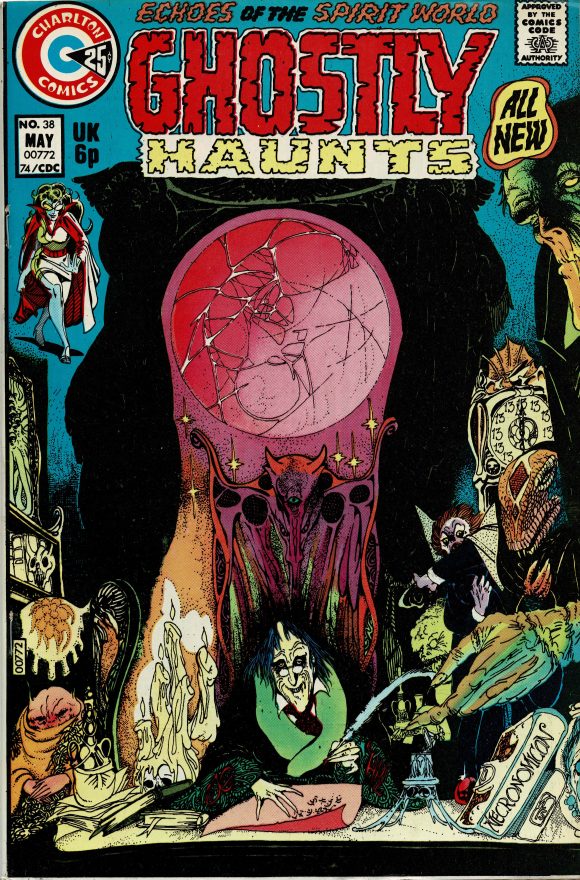
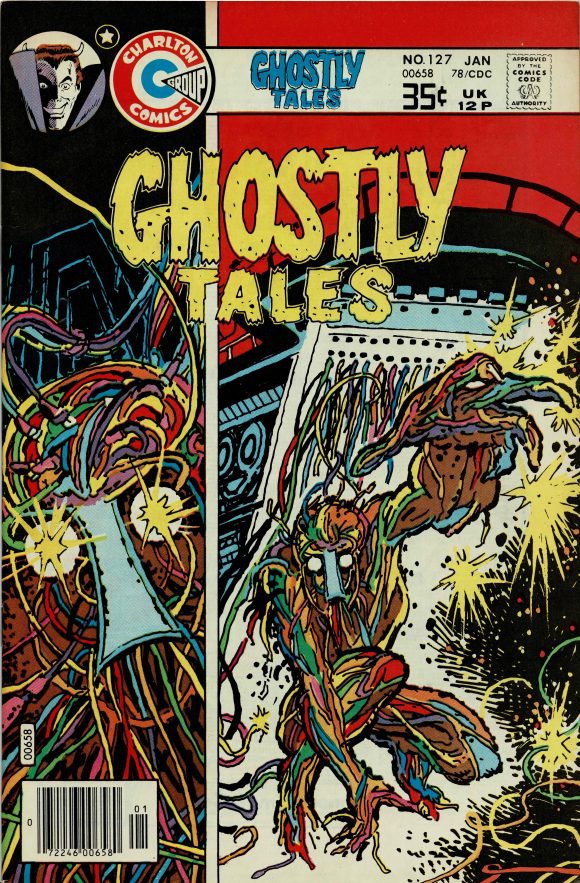
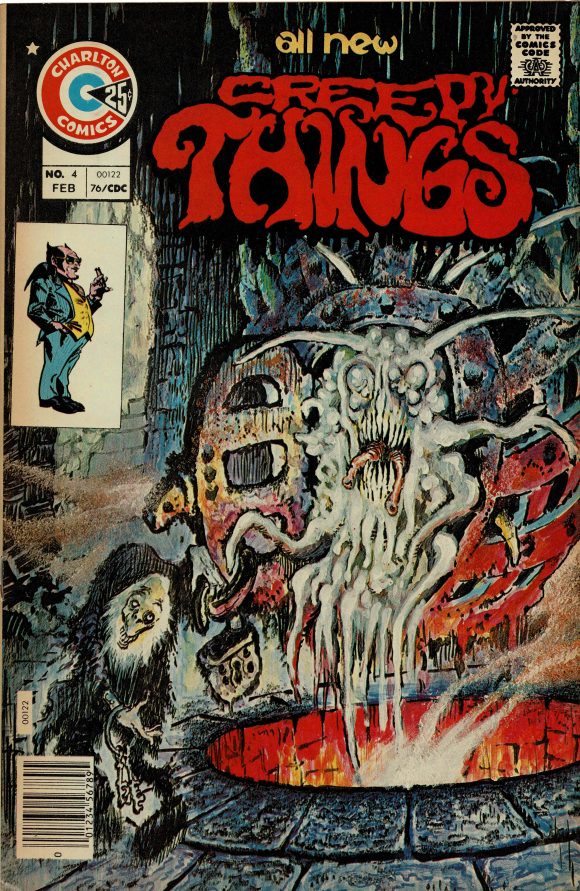
    These Charlton covers show why Sutton deserves a place in any Bronze Age horror conversation: crowded compositions, theatrical terror and color that feels one heartbeat away from chaos.

    Tom Sutton cover art for Creepy Things volume 1 number 4
    Creepy Things #4
    Tom Sutton cover art · Charlton
    Tom Sutton cover art for Ghostly Haunts number 38
    Ghostly Haunts #38
    Tom Sutton cover art · Charlton
    Tom Sutton cover art for Ghostly Tales number 127
    Ghostly Tales #127
    Tom Sutton cover art · Charlton

    Three architects of the darkness

    Comic artist Bernie Wrightson at the 2006 Dallas Comic Con

    Bernie Wrightson

    Co-creator of Swamp Thing and the master whose intricate pen and brush work made decay feel almost romantic.

    Photo: Corey Bond · CC BY-SA 3.0 · Wikimedia Commons

    Comic artist Gene Colan at the 2009 Big Apple Summer Sizzler

    Gene Colan

    The visual soul of Tomb of Dracula, drawing fog, motion and menace as though every panel were lit by moonlight.

    Photo: © Luigi Novi · CC BY 3.0 · Wikimedia Commons

    Comic writer Marv Wolfman

    Marv Wolfman

    The writer who helped turn Tomb of Dracula into a landmark run and co-created Blade with Gene Colan.

    Photo: Noel Wolfman · Public domain · Wikimedia Commons

    Historic comic covers are reproduced at low resolution for criticism and commentary; all cover art and characters remain the property of their respective rights holders. Cover image source: 13th Dimension’s Tom Sutton Charlton gallery.

    Six Doors Into the Era

    The keys that define the comeback.

    Not every important horror book is scarce. Not every classic cover contains a first appearance. The magic is learning what kind of importance you are holding.

    DC · 1971

    House of Secrets #92

    Len Wein and Bernie Wrightson’s first Swamp Thing story is Gothic tragedy distilled into one unforgettable issue. DC identifies it as the character’s first appearance, and Wrightson’s cover remains one of the defining images of Bronze Age horror.

    Collector lens · first appearance + iconic cover

    Marvel · 1971

    Amazing Spider-Man #101

    Morbius arrived as a “living vampire”—scientific enough to enter Spider-Man’s world, monstrous enough to announce that the old restrictions were losing their power. It is the perfect bridge between superhero comics and the supernatural boom.

    Collector lens · major debut in a flagship title

    Marvel · 1972

    Tomb of Dracula #1

    Dracula did not sneak back as a guest villain. He claimed his own title. The series would run from 1972 through 1979 and become one of Marvel’s signature horror achievements, with Gene Colan’s shadow-soaked storytelling central to its identity.

    Collector lens · launch of a landmark horror run

    Marvel Spotlight · 1972

    Marvel Spotlight #2

    The first appearance of Jack Russell’s Werewolf by Night turned lycanthropy into an ongoing family curse. Mike Ploog’s art brought a raw, pulpy energy that makes the early issues feel less like standard superheroes and more like midnight cinema.

    Collector lens · first appearance + monster magazine mood

    Marvel Spotlight · 1972

    Marvel Spotlight #5

    Johnny Blaze’s first appearance as Ghost Rider is pure Bronze Age spectacle: stunt motorcycles, a bargain with darkness and the immortal visual of a flaming skull in motion. Horror had officially become superhero mythology.

    Collector lens · enduring character + unforgettable design

    Marvel · 1973

    Tomb of Dracula #10

    Blade’s first appearance proved that the horror revival could create heroes as culturally durable as any costumed crime-fighter. He did not merely survive the vampire genre—he helped carry it into comics, film and the modern Marvel universe.

    Collector lens · first Blade, born inside a horror title

    Buying With Your Eyes Open

    Condition is part of the story.

    Bronze Age horror covers often make defects impossible to hide—and that is precisely why beautiful copies feel so luxurious.

    • Inspect the dark fieldsBlack, navy and deep red covers advertise color-breaking spine ticks, rub and edge wear.
    • Check every attachment pointConfirm the cover, staples and centerfold are secure before deciding what the grade might be.
    • Look for missing insertsValue stamps, coupons and interior cutouts can matter far more than a glossy front-cover photograph suggests.
    • Separate rarity from demandA first appearance, classic cover, scarce issue and fan-favorite run are four different collecting arguments.
    • Respect the paperA conservative press may improve suitable non-color-breaking defects, but no treatment should gamble with a key book’s structure.

    Why the Era Still Matters

    Bronze Age horror made the monster beautiful enough to collect and complicated enough to love.

    These books sit at the crossroads of classic cinema, Gothic literature, superhero continuity and 1970s counterculture. They gave artists permission to work in shadow. They gave writers protagonists who could be cursed, morally uncertain or visibly monstrous. And they gave collectors a category where a single issue can be a first appearance, a cover masterpiece and a tiny piece of cultural rebellion all at once.

    That is why the best Bronze Age horror keys do not feel like relics. They still feel dangerous on the wall.

    Enter the Collection

    Buy the book that haunts you.

    Veronicatot Comics eBay Store is where comics, artifacts and dark little treasures wait for their next caretaker. And when an older key needs careful presentation work, the Pink Room Spa puts preservation first.

    Ronnie · The Pink Room Journal · VeronicaTot Comics

  • Carnival of Souls: The Haunted Dream That Refuses to End

    Carnival of Souls: The Haunted Dream That Refuses to End

    VeronicaTot outside a haunted carnival pavilion for Carnival of Souls in The Pink Room Picture Show

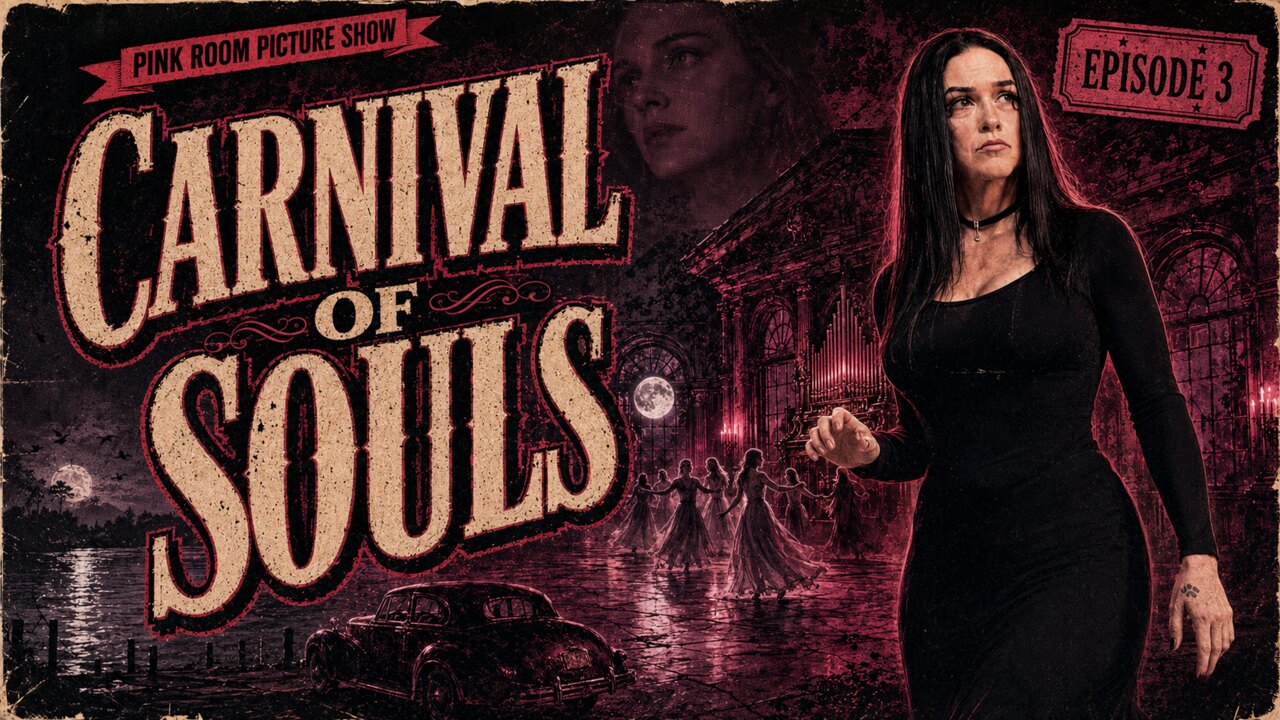
    The Pink Room Picture Show · Episode 3

    She survived the river—but something followed her out.

    Herk Harvey’s eerie masterpiece drifts between loneliness, nightmare and a ruined pavilion waiting beside the salt flats.

    1962Psychological HorrorBlack & WhiteCult ClassicPublic-Domain Editions Circulate

    Hello, my darlings—and welcome to the abandoned pavilion, where the organ plays after midnight, pale figures dance beneath broken lights and one woman cannot decide whether she escaped death or merely wandered deeper inside it.

    Carnival of Souls is not interested in loud shocks. It works through silence, distance and disconnection, following Mary Henry through a world that gradually stops acknowledging her existence.

    Watch the complete movie with Veronica in the Pink Room

    Title
    Carnival of Souls
    Release
    1962
    Director & producer
    Herk Harvey
    Writer
    John Clifford
    Starring
    Candace Hilligoss, Frances Feist, Sidney Berger and Herk Harvey
    Music
    Gene Moore

    The Woman Who Walked Out of the River

    A car carrying three young women plunges from a bridge into a muddy river. Hours later, Mary Henry emerges from the water as the only apparent survivor. She leaves Kansas for a new job as a church organist in Utah, determined to build a life untouched by the tragedy.

    But Mary never fully rejoins the living world. Conversations feel distant. People seem unable to hear her. A pale man appears in windows and reflections, watching with an expression that is less violent than inevitable. At the edge of the city stands an abandoned lakeside pavilion, and Mary feels drawn toward it despite every instinct telling her to stay away.

    The terror is not that Mary is being chased. It is that the world may already have let her go.

    Candace Hilligoss and the Loneliness of Mary Henry

    Candace Hilligoss gives Mary a cool, guarded presence. She is independent without seeming secure, observant without understanding what she sees and increasingly frightened by the possibility that her isolation is not merely emotional.

    Mary’s refusal to perform warmth for the people around her makes her unusual for a heroine of the period. She does not want romance, community or the approval of her intrusive neighbor John Linden. She wants work, privacy and control. The film slowly removes each of those certainties.

    The Pavilion at the Edge of Reality

    The abandoned Saltair pavilion is one of horror cinema’s great locations. Its long corridors, empty dance floor and decaying architecture feel designed for a celebration that ended decades ago but never truly stopped.

    Herk Harvey first saw the ruined resort while passing through Utah and imagined pale figures rising from the water to dance inside it. That image became the film’s center. The pavilion is not simply haunted; it seems to occupy a space where memory, death and desire overlap.

    An Organ Score from Another World

    Gene Moore’s organ music gives the film its pulse. Because Mary is an organist, the sound belongs naturally to her everyday life, yet it also seems to come from somewhere beneath the story. Sacred chords twist into carnival rhythms, and the familiar instrument becomes a doorway.

    The score allows the movie to drift between the real and unreal without announcing the transition. By the time the ghouls begin their dance, the music has already taught us that Mary’s world can change shape at any moment.

    Herk Harvey’s One Impossible Feature

    Harvey spent most of his career directing industrial and educational films for the Centron Corporation in Lawrence, Kansas. Carnival of Souls was his only feature, made with a small regional crew and photographed on location in Kansas and Utah.

    Its limited resources became its aesthetic. Empty streets, harsh daylight, doubled voices and ordinary rooms acquire an uncanny stillness. What might look imperfect in another production feels here like evidence that Mary has slipped slightly out of alignment with reality.

    The Film That Would Not Stay Buried

    The initial release did little to establish the movie, but late-night television and revival screenings gradually found its audience. Filmmakers and critics recognized its dream logic, stark photography and sense of cosmic isolation.

    Its influence can be felt in later psychological horror and in filmmakers fascinated by unstable identity and haunted spaces. Criterion’s restoration and the Academy Film Archive’s preservation work helped secure the film’s place as far more than an accidental midnight curiosity.

    Why It Belongs in the Pink Room

    Carnival of Souls belongs in the Pink Room because it turns atmosphere into an entire universe. It proves that horror can be elegant, lonely and beautiful—that a deserted ballroom and a few distant figures can disturb us more deeply than spectacle.

    Mary Henry walks through doors without knowing whether they lead toward life or away from it. That uncertainty is the film’s spell, and more than sixty years later, the music still calls audiences back to the pavilion.

    Sources & Further Reading

    The music has started, my darling. Try not to join the dance.

    VeronicaTot Comics · Because Comics Deserve Couture Too

  • Night of the Living Dead: The Night Modern Horror Was Born

    Night of the Living Dead: The Night Modern Horror Was Born

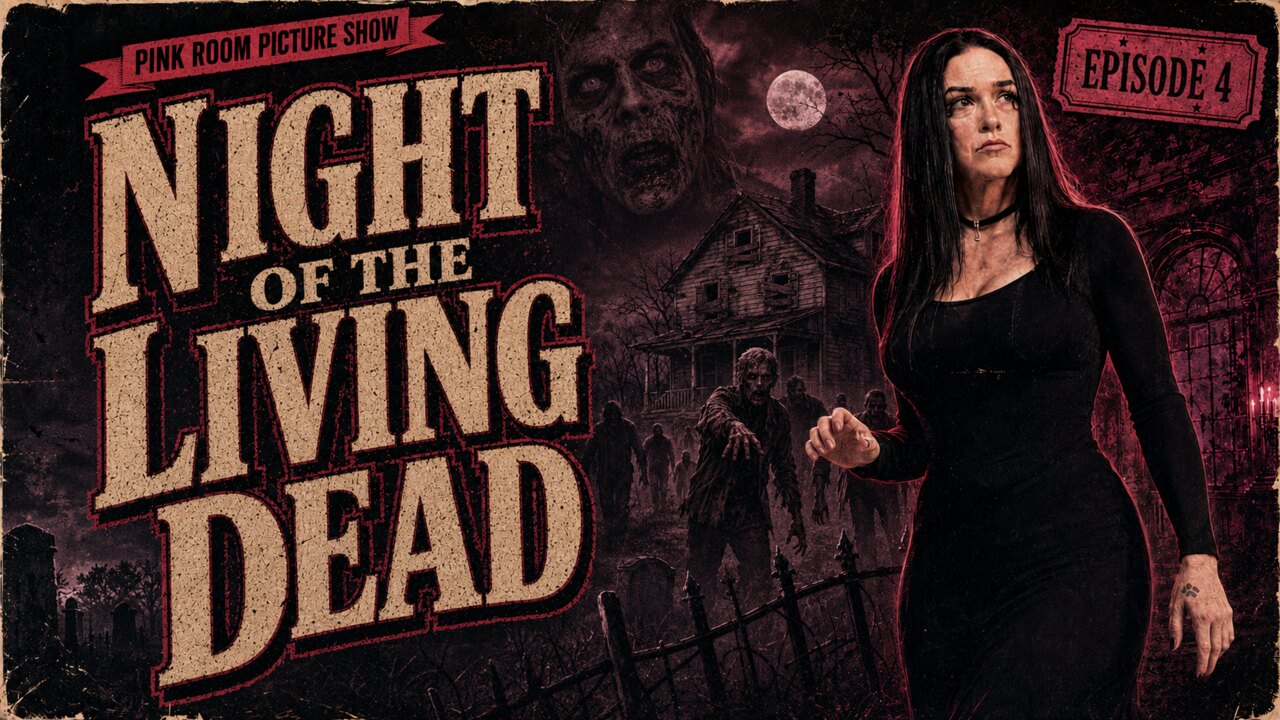
    The Pink Room Picture Show · Episode 4

    The dead rise—and modern horror is born.

    George A. Romero turns one lonely Pennsylvania farmhouse into a nightmare that changed horror cinema forever.

    1968HorrorBlack & WhiteNational Film RegistryPublic Domain in the U.S.
    VeronicaTot surrounded by the living dead for Night of the Living Dead in The Pink Room Picture Show

    Hello, my darlings—and welcome to the night when the cemetery stopped being quiet, the farmhouse became a fortress and the dead discovered they could walk.

    Night of the Living Dead did not merely introduce a new kind of monster. George A. Romero’s stark 1968 nightmare changed where horror could happen, who could stand at its center and how mercilessly a movie could confront its audience.

    Watch the complete movie with Veronica in the Pink Room

    Title
    Night of the Living Dead
    Release
    1968
    Director
    George A. Romero
    Writers
    George A. Romero and John A. Russo
    Starring
    Duane Jones, Judith O’Dea, Karl Hardman, Marilyn Eastman, Judith Ridley and Keith Wayne
    Production
    Image Ten

    They’re Coming to Get You, Barbra

    The opening is almost playful. Barbra and her brother Johnny visit their father’s grave, trading complaints and childhood teasing beneath a pale sky. Then a strange man appears among the stones. Within minutes Johnny is dead, Barbra is fleeing through the countryside and the familiar world has ended without warning.

    She reaches an isolated farmhouse where Ben, played by Duane Jones, takes control. He boards the windows, searches for supplies and tries to understand the scattered radio reports. Other survivors emerge from the cellar, but safety becomes impossible when fear, pride and incompatible plans turn the people inside against one another.

    The monsters outside are terrifying. The certainty that the people inside cannot cooperate is worse.

    Duane Jones Changes the Center of the Story

    Ben is intelligent, decisive and physically capable—the person most prepared to survive. Duane Jones gives him authority without turning him into a simple action hero. He thinks, listens, argues and sometimes loses his temper because the situation demands more from him than anyone should have to give.

    Romero and his collaborators said Jones was cast because he was the best actor available, and the screenplay was not rewritten around his race. Yet placing a Black man at the center of an American horror film in 1968 inevitably transformed the movie’s meaning. Ben’s struggle for control inside the farmhouse and the devastating final images carry a force the filmmakers could not separate from the world outside the theater.

    A New Kind of Living Dead

    Earlier screen zombies were often linked to hypnosis, magic or distant exoticism. Romero’s creatures are ordinary dead people returned with an appetite for living flesh. They move slowly, gather in numbers and turn every familiar neighbor into a possible threat.

    The movie calls them ghouls, but audiences recognized the foundation of the modern zombie. Countless later films, television series, comics and games inherited Romero’s rules: destroy the brain, fear the bite and understand that one creature is manageable while a crowd becomes the end of civilization.

    Horror in an Ordinary Place

    The farmhouse is not a Gothic castle or a laboratory. It is a plain rural home filled with furniture, tools, a television and a cellar. That familiarity makes the siege feel immediate. The nightmare is not happening in a distant land; it is unfolding down the road.

    The grainy black-and-white photography gives the images the urgency of news footage. Radio and television broadcasts provide fragments of explanation, but no comforting authority arrives to restore order. The world beyond the boards feels as frightened and confused as the people trapped inside.

    The Ending That Refuses Comfort

    Without spoiling every turn for viewers entering the farmhouse for the first time, the conclusion remains one of the most brutal in American horror. Romero does not reward competence, courage or audience loyalty. Morning does not guarantee salvation.

    The final sequence of still photographs resembles documentary evidence rather than a conventional movie ending. The horror continues after the last scream because the images force us to consider not only what happened, but how casually the world processes it.

    From Regional Production to American Landmark

    Made independently around Pittsburgh, Night of the Living Dead became a phenomenon far beyond its modest resources. Its violence shocked early audiences, its bleakness divided critics and its influence spread through nearly every corner of modern horror.

    In 1999, the Library of Congress selected the film for the National Film Registry as a work of cultural, historical or aesthetic significance. The honor recognized what horror fans already knew: this was not merely a successful monster movie. It was a turning point in American cinema.

    Why It Belongs in the Pink Room

    The Pink Room Picture Show celebrates films whose imagination exceeded their budgets and whose creators built worlds that audiences could never forget. Few movies embody that spirit more completely than Night of the Living Dead.

    It is raw, intelligent, frightening and unwilling to flatter us. More than half a century later, the farmhouse door still feels fragile, the radio reports still feel urgent and the figures moving across the field still make us check the windows.

    Sources & Further Reading

    Keep the doors barred, my darling. Something is moving beyond the porch light.

    VeronicaTot Comics · Because Comics Deserve Couture Too

  • The Little Shop of Horrors: Roger Corman’s Hungry Plant and Cult-Movie Chaos

    The Little Shop of Horrors: Roger Corman’s Hungry Plant and Cult-Movie Chaos

    VeronicaTot with a giant carnivorous plant for Little Shop of Horrors in The Pink Room Picture Show

    The Pink Room Picture Show · Episode 2

    Flowers, murder and one very hungry plant.

    Roger Corman’s gloriously odd horror comedy turns a shabby flower shop into the most dangerous attraction on Skid Row.

    1960Horror Comedy70 MinutesBlack & WhitePublic Domain in the U.S.

    Hello, my darlings—and welcome to Mushnick’s Flower Shop, where business is wilting, romance is awkward and the newest plant on display has an appetite no amount of fertilizer can satisfy.

    The Little Shop of Horrors is Roger Corman at his fastest, strangest and most playful: a black comedy assembled with B-movie ingenuity, populated by lovable eccentrics and powered by the increasingly desperate question of what poor Seymour will feed Audrey Junior next.

    Watch the complete movie with Veronica in the Pink Room

    Title
    The Little Shop of Horrors
    Release
    1960
    Director & producer
    Roger Corman
    Writer
    Charles B. Griffith
    Starring
    Jonathan Haze, Jackie Joseph, Mel Welles and Dick Miller
    Runtime
    70 minutes

    A Flower Shop on the Edge of Disaster

    Seymour Krelboined works for Gravis Mushnick, the perpetually exasperated owner of a failing Skid Row flower shop. Seymour is clumsy, nervous and hopelessly in love with his co-worker Audrey Fulquard. His one chance to prove himself arrives in the form of a peculiar plant he has raised from an unidentified seed.

    The strange little specimen draws customers and saves Seymour’s job, but it soon reveals the flaw in this promising arrangement: ordinary plant food will not do. Audrey Junior wants blood. As the plant grows, so does its voice, its appetite and Seymour’s panic.

    Feed me. Feed me. I’m hungry!

    Roger Corman’s Two-Day Miracle

    The production has become legendary for its speed. Corman reused sets left standing from A Bucket of Blood, rehearsed quickly and photographed the story with the efficiency that made him the king of independent filmmaking. The result does not feel cautious or overworked. It moves with the cheerful recklessness of everyone involved knowing they have very little time and deciding to make that part of the fun.

    Charles B. Griffith’s screenplay treats reality as optional. Characters misunderstand one another, jokes arrive from unexpected directions and the film leaps from romance to murder to police parody without asking permission. Its handmade energy is not something a polished remake could reproduce. This movie is alive in precisely the same unruly way as Audrey Junior.

    Seymour, Audrey and Mushnick

    Jonathan Haze makes Seymour both ridiculous and oddly sympathetic. He is not a criminal mastermind; he is a frightened young man whose attempts to solve one problem create three more. Jackie Joseph gives Audrey a sweet sincerity that keeps the romance from disappearing beneath the farce, while Mel Welles turns Mushnick’s outrage into a wonderfully elastic comic performance.

    The flower shop becomes a stage for an entire neighborhood of eccentrics. Dick Miller appears as Burson Fouch, a customer who eats flowers as casually as other people eat candy. Myrtle Vail nearly steals the picture as Seymour’s spectacularly hypochondriacal mother, who treats every ailment like a cherished hobby.

    A Young Jack Nicholson Goes to the Dentist

    The film’s most famous detour belongs to Jack Nicholson as Wilbur Force, a gleefully masochistic dental patient. He appears only briefly, but the performance is unmistakable: the grin, the manic timing and the feeling that this young actor has discovered a private joke no one else in the room fully understands.

    The dental sequence has little interest in advancing the plant story. It exists because it is funny, strange and perfectly suited to the movie’s crooked universe. That freedom is one of the film’s greatest pleasures.

    From Tiny Production to Cult Institution

    The movie’s afterlife grew far beyond its modest beginnings. It became a favorite at midnight screenings and art houses, inspiring audiences to shout lines and participate long before interactive cult cinema became familiar. Its central idea later bloomed into the off-Broadway musical by Howard Ashman and Alan Menken and the beloved 1986 film adaptation.

    Yet the 1960 original remains its own creature. It is scrappier, darker and more absurd. Audrey Junior is less a polished star than a botanical nightmare assembled in the back room, which makes the danger feel both hilarious and strangely intimate.

    Why It Belongs in the Pink Room

    The Little Shop of Horrors understands something essential about horror comedy: the monster can be frightening, but the people surrounding it should be even stranger. It mixes old-Hollywood faces, beatnik energy, slapstick murder and a talking plant into a movie that never pauses long enough to become respectable.

    That is exactly why it belongs here. The Pink Room Picture Show celebrates movies with personality—films whose ambitions outgrew their budgets and whose oddest choices became the reason audiences still love them.

    Sources & Further Reading

    Mind the vines, my darling. Audrey Junior has noticed you.

    VeronicaTot Comics · Because Comics Deserve Couture Too

  • House on Haunted Hill: Vincent Price Invites You to Stay the Night

    House on Haunted Hill: Vincent Price Invites You to Stay the Night

    VeronicaTot presents House on Haunted Hill in The Pink Room Picture Show

    The Pink Room Picture Show

    Five strangers. One locked house. Ten thousand dollars.

    Vincent Price invites you to the most dangerous cocktail party in horror history, where the doors lock at midnight and surviving until morning may be worth more than money.

    1959 Horror 75 Minutes Black & White Public Domain in the U.S.

    Hello, my darlings—and welcome to the house where the Pink Room Picture Show began. Before the portal, before the expanding universe and before Walter started appearing in windows, there was Vincent Price standing in the darkness with an invitation no sensible person should accept.

    House on Haunted Hill is pure William Castle showmanship: elegant, sinister, playful and always aware that a horror movie should feel like an event. It brought together Castle’s carnival-barker imagination and Vincent Price’s velvet-smooth menace, then locked them inside a mansion with five desperate strangers, a collection of loaded pistols, an acid vat and one deeply unhappy marriage.

    It was the perfect film to open the doors of the Pink Room Picture Show—and it became the episode that first showed how many viewers were waiting to come inside.

    Watch the complete movie with Veronica in the Pink Room

    Title
    House on Haunted Hill
    Release
    1959
    Produced & directed by
    William Castle
    Written by
    Robb White
    Starring
    Vincent Price, Carol Ohmart, Richard Long, Carolyn Craig and Elisha Cook Jr.
    Runtime
    75 minutes

    An Invitation from Frederick Loren

    Eccentric millionaire Frederick Loren, played with exquisite composure by Vincent Price, rents a house with a murderous reputation. He and his wife Annabelle invite five strangers to spend the night. Anyone who remains inside until morning will receive ten thousand dollars.

    The guests arrive in funeral cars. The doors lock at midnight. Each person receives a small coffin containing a loaded pistol. Before long, chandeliers fall, blood drips from ceilings, severed heads appear where no severed heads should be, and Nora Manning becomes convinced that something inside the house wants her dead.

    The delicious question is never simply whether the house is haunted. It is whether Frederick and Annabelle are more dangerous than any ghost could ever hope to be.

    Vincent Price does not merely enter a room. He makes the room understand that it now belongs to him.

    Vincent Price at His Most Delicious

    Frederick Loren is one of the roles that helped solidify Vincent Price as a horror icon. He is charming, amused and impossible to read. Every line shared with Annabelle carries the polish of a champagne glass and the edge of a razor.

    Price never needs to shout to command the picture. A lifted eyebrow can imply an entire conspiracy. A polite smile can feel more threatening than a scream. He allows the audience to enjoy Frederick’s sophistication while never letting us forget that this is a man who may have planned something dreadful.

    Opposite him, Carol Ohmart gives Annabelle exactly the right poisonous glamour. Their marriage is the film’s most convincing haunting: beautiful on the outside, dead and dangerous within.

    William Castle Makes Horror an Event

    William Castle understood that audiences did not merely buy tickets to see a movie. They bought the story surrounding the movie—the dare, the anticipation and the feeling that something might escape the screen.

    For selected first-run screenings of House on Haunted Hill, Castle created a theatrical gimmick he called Emergo. At the appropriate moment, a full-sized plastic skeleton traveled along wires above the audience. The film’s own closing credits even include the immortal line: “Skeleton by Himself.”

    It was playful, shameless and brilliant. Castle turned the entire theater into part of the attraction. Long before immersive cinema became a fashionable phrase, he understood that a memorable presentation could make a modestly budgeted movie feel enormous.

    The House That Is Never Quite the Same House

    The unforgettable exterior is Frank Lloyd Wright’s Ennis House in Los Feliz, California. Its geometric architecture gives the mansion an ancient, almost alien severity. Inside, however, the movie shifts into a very different world of creaking doors, gloomy corridors, gaslight and Gothic clutter.

    The mismatch should be distracting, yet it adds to the dreamlike unease. The house refuses to settle into one identity. It is modern from the outside, Victorian within, and something far stranger underneath.

    Elisha Cook Jr.’s Watson Pritchard gives the building its mythology. He speaks of the house as though it is not merely haunted but hungry. While the other guests debate tricks, motives and murder, Pritchard remains certain: the ghosts are real, and they are coming for all of them.

    Why It Opened the Pink Room

    House on Haunted Hill contains everything the Pink Room Picture Show was created to celebrate: a magnetic host-like presence, macabre humor, old-Hollywood glamour, practical theatricality and a story that welcomes the audience as a guest before quietly locking the door behind them.

    Beginning the series with William Castle also felt right. Castle believed presentation mattered. He knew viewers wanted more than a file playing on a screen; they wanted an evening, an invitation and a shared experience. That same belief lives at the center of the Pink Room.

    This first episode did more than introduce a classic film. It opened a door. The audience stepped through, the Pink Room began to grow, and the lights have been glowing ever since.

    Sources & Further Reading

    The doors are locked, my darling. You may as well stay for another picture.

    VeronicaTot Comics · Because Comics Deserve Couture Too